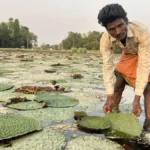
India especially Bihar dominates global makhana production, supplying roughly 85–90% of world supply. As an experienced importer or distributor, you already understand that direct-farm sourcing from Mithila delivers the quality, consistency, and pricing your clients demand. This guide provides the technical specifications, regulatory framework, and commercial intelligence you need to source bulk makhana exporter (Euryale ferox) efficiently from Darnif Exim.
Table of Contents
Key Takeaways for Experienced Importers
- India exported approximately 25,000 MT of makhana in 2024, driven by health-snack demand and improved processing certifications (APEDA)
- GI-Tagged Mithila Makhana from Bihar commands premium pricing due to superior size, nutritional density, and traditional processing methods
- EU authorization for roasted/popped makhana as traditional food simplifies European market entry with proper documentation (EUR-Lex Regulation 2023/652)
- U.S. FDA compliance requires facility registration, Prior Notice filing, and comprehensive COA — experienced exporters provide full documentation packages
- Wholesale pricing advantages through direct-farm relationships eliminate 2-3 intermediary markups typical in traditional supply chains
1. Names & Terminology: Commercial Precision for International Trade
For export documentation, product labels, and B2B listings, botanical accuracy prevents customs delays and meets buyer specifications. Euryale ferox is the scientifically correct designation; however, multiple trade names dominate regional markets.
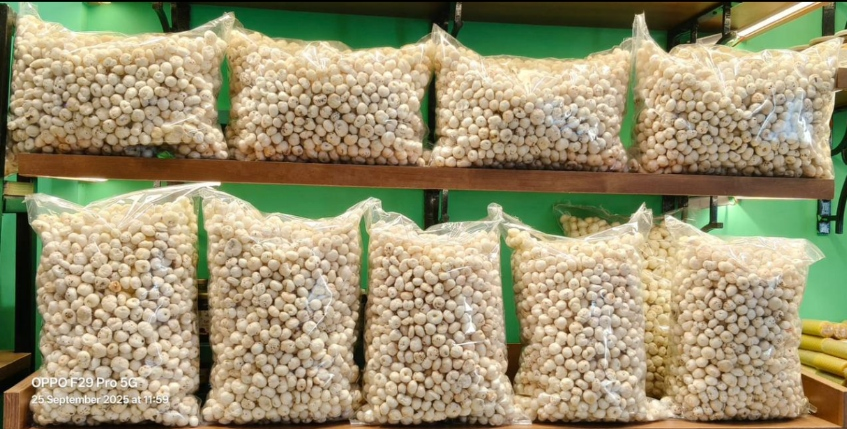
Global Trade Names Reference Table
| Region/Language | Common Trade Names |
| International English | Fox nut, Gorgon nut, Popped Water Lily Seeds, Phool Makhana |
| Hindi/India | मखाना (Makhana), Phool Makhana |
| Bengali | Padma bija |
| Punjabi | Kamala dā bīja |
| Telugu | Melluni padmamu |
| Marathi | कमळ बियाणे (kamal biyane) |
| Assamese | Nikori |
| Japanese | Hasu no mi |
| Chinese (Mandarin) | 芡实 (Qián shí) |
| Korean | Ga-si-yeon |
| Spanish/Latin America | Semilla de loto, fruto de loto |
Many markets use “lotus seed” colloquially; however, Euryale ferox (makhana) is botanically distinct from Nelumbo nucifera (true lotus kernel). For customs, phytosanitary documentation, and quality specifications, always reference Euryale ferox to avoid classification confusion and potential regulatory delays.
2. Product Formats & Commercial Specifications
Experienced importers purchase based on precise format specifications. Darnif Exim provides comprehensive technical data for each grade.
Available Options for Bulk Makhana or Fox Nut Exporter in India
Raw Kernels (Unpuffed, Cleaned, Graded)
- Application: Industrial processors, snack manufacturers, ingredient suppliers
- Grading System: Based on Suta measurement (traditional Bihar grading)
- 7+ Suta (Jumbo Premium): >18mm diameter, <10% breakage
- 6 Suta (Standard Export): 16-18mm diameter, <12% breakage
- 5 Suta (Economy/Industrial): 14-16mm diameter, suitable for flavored products
- Moisture Content: 9-11% (critical for shelf stability during ocean freight)
- Packaging: 25kg or 50kg woven polypropylene bags with food-grade HDPE inner liners
- Typical MOQ: 2-5 tonnes FOB for container-load shipments
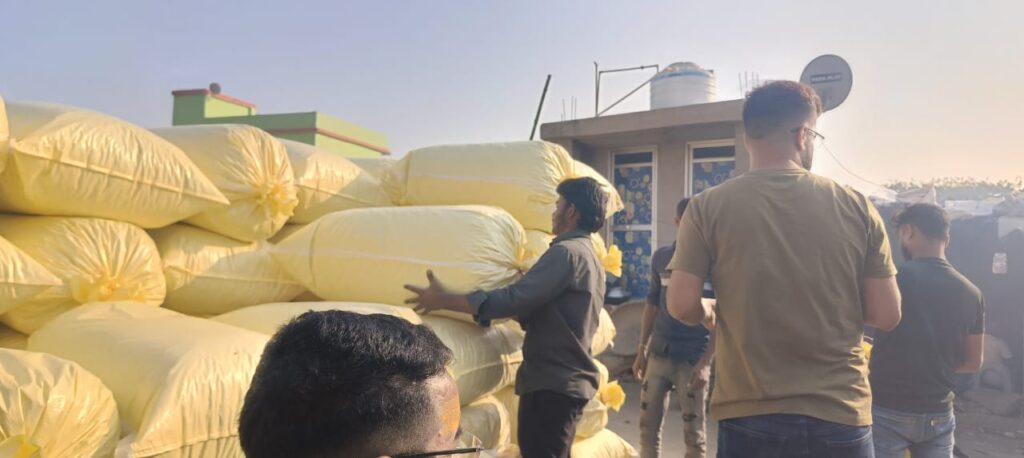
Popped/Roasted Makhana (Retail-Ready)
- Application: Premium retail SKUs, private label programs, health food chains
- Processing: Traditional “Lava” hand-popping or mechanical processing
- Flavor Options: Plain salted, masala, cheese, honey roasted, peri-peri, truffle
- Packaging: Nitrogen-flushed pouches (preserves crunch 12-18 months), bulk foodservice bags
- Shelf Life: 12-18 months with nitrogen flushing, 6-8 months standard packaging
- Quality Metrics: Crunchy texture retention, uniform color, minimal breakage
Makhana Flakes & Powder
- Application: Confectionery blends, gluten-free flour, cereal manufacturing
- Particle Size: Custom milling available (coarse flakes to fine powder)
- Packaging: Vacuum-sealed bags to prevent moisture absorption
Modified Atmosphere Packaging (MAP)
- Application: Extended shelf life for international retail distribution
- Gas Mix: Nitrogen/CO2 blend optimized for Fox Nuts
- Advantage: Maintains crispness during long transit and warehouse storage
Technical Documentation Provided Per Lot
- Certificate of Analysis (COA): Moisture, protein, ash, carbohydrate content
- Contaminant Testing: Pesticide residues (organophosphates, carbamates, pyrethroids), heavy metals (lead, arsenic, cadmium), aflatoxin levels
- Microbiological Analysis: Salmonella, E. coli, total plate count, yeast/mold
- Grading Report: Size distribution, breakage percentage, visual inspection results
- Batch Traceability: Farm source identification, harvest date, processing date
3. Target Markets: Demand Analysis & Buyer Profiles
Singapore: Southeast Asian Distribution Hub
Market Characteristics:
- Annual Import Volume: Growing specialty health snack market with 15-20% YoY growth
- Buyer Priorities: Halal certification, consistent small-volume shipments (1-3 tonnes), rapid lead times
- Distribution Role: Singapore serves as regional hub for Malaysia, Indonesia, Philippines redistribution
- Pricing Sensitivity: Premium positioning acceptable with proper certifications
Key Requirements for Singapore Importers:
- Halal certification (JAKIM or equivalent recognized authority)
- AVA (Singapore Food Agency) compliance documentation
- Air freight options for initial test shipments and time-sensitive orders
- Flexible payment terms for established distribution relationships
United Kingdom & European Union
Market Characteristics:
- Strong Clean-Label Demand: Organic, vegan, non-GMO claims drive premium pricing
- Regulatory Environment: EU Novel Food authorization for roasted/popped Euryale ferox kernels (Commission Implementing Regulation 2023/652)
- Distribution Channels: Health food multiples, organic retailers, ethnic food specialists, online platforms
EU-Specific Import Requirements:
- Novel Food Compliance: Ensure product description matches authorized use under EU Regulation 2023/652
- Organic Certification: EU Organic regulation compliance (India NPOP equivalence or direct EU certification)
- Traceability Documentation: Farm-to-export chain of custody for food safety compliance
- Labeling Standards: Multilingual ingredient declarations, allergen statements, nutritional information per EU format
UK Post-Brexit Considerations:
- UKCA marking for certain product categories
- UK-specific food safety registration (though largely aligned with EU standards)
- Potential tariff advantages under India-UK trade discussions
Buyer Profile – European Distributors: What they demand in RFQs:
- Comprehensive COA with EU-standard lab testing protocols
- Supply chain transparency: farm cooperative details, processing facility information
- Sustainability credentials: fair trade practices, environmental impact data
- Consistent sizing: tight tolerance specifications critical for automated packing lines
- Long-term supply agreements: European retailers prefer 12-month contracts with price stability
United States of America
Market Characteristics:
- Largest Premium Snack Market: Health-conscious consumers drive $150B+ healthy snack category
- Product Positioning: “Fox nut” and “Popped Water Lily Seeds” terminology gaining traction
- E-Commerce Dominance: Amazon, Thrive Market, specialty online retailers command significant volume
- Pricing Power: Premium positioning sustainable with proper branding and certifications
FDA Compliance Framework for US Imports:
1. Facility Registration & FSVP
- Foreign Supplier Verification Program (FSVP): US importers legally responsible for supplier verification
- FDA Facility Registration: Darnif Exim maintains current FDA registration for eligible exports
- Prior Notice Requirements: Electronic filing 8 hours before ocean freight arrival, 2 hours for truck/air
2. Food Safety Documentation
- HACCP Compliance: Hazard analysis protocols documented and available for FDA review
- Preventive Controls: Processing facility follows FSMA preventive control requirements
- Lab Testing: FDA-standard methodology for pesticide residues, heavy metals, microbiological contamination
3. Labeling & Commercial Requirements
- Nutrition Facts Panel: FDA 2020 format compliance mandatory
- Allergen Declarations: Clear “Contains” statements even for allergen-free products
- Net Weight: Dual declaration (ounces/pounds and grams/kilograms)
- Country of Origin: “Product of India” clearly stated
4. HS Code Classification Proper classification prevents customs delays and penalty assessments:
| Product Form | HS Code | Typical Duty Rate | FDA Priority |
| Raw/Dried Makhana (unsalted, unflavored) | 0810.90.90 | 2.7% | Medium scrutiny |
| Roasted/Flavored Fox Nuts | 2008.19.90 | 6.6% | Medium-high scrutiny |
| Makhana Flour/Ground | 1106.30.90 | 5.8% | Low scrutiny |
Buyer Profile – US Importers: What serious US distributors expect:
- USDA Organic certification (where applicable) for natural/health food channels
- Consistent FDA compliance history: No Import Alert placements
- Container-load capacity: Ability to fulfill 20-foot or 40-foot container orders
- Competitive FOB pricing: Transparent costing that accounts for all certifications
- Sample programs: Pre-purchase evaluation with reasonable sample costs and shipping
4. Regulatory Compliance & Export Documentation
Core Export Documentation Package
Every FDA registered bulk makhana exporters Bihar shipment from Darnif Exim includes:
Mandatory Indian Export Documents:
- FSSAI Registration: Food Safety and Standards Authority of India compliance
- APEDA Registration: Agricultural and Processed Food Products Export Development Authority authorization
- IEC (Import Export Code): Directorate General of Foreign Trade registration
International Trade Documents:
- Certificate of Origin (COO): Preferential trade agreement utilization where applicable
- Phytosanitary Certificate: Plant quarantine clearance for agricultural commodities
- Commercial Invoice: Detailed product description, HS codes, unit pricing, total value
- Packing List: Container manifest with weights, dimensions, batch numbers
Quality Assurance Certifications:
- Certificate of Analysis (COA): ISO 17025 accredited laboratory testing
- HACCP Certification: Hazard Analysis Critical Control Point system compliance
- ISO 22000:2018: Food Safety Management System certification
- GMP (Good Manufacturing Practices): Processing facility standards documentation
Optional Premium Certifications (Additional Charges Apply):
- USDA Organic: United States Department of Agriculture organic certification
- EU Organic: European Union organic regulation compliance (equivalence or direct certification)
- Halal Certification: JAKIM or recognized Islamic certification authority
- Kosher Certification: Orthodox Union or equivalent rabbinical supervision
- Non-GMO Project Verified: Third-party non-GMO verification
- Gluten-Free Certification: GFCO or equivalent gluten-free certification body
Novel Food Authorization – European Union
Regulatory Status:
Commission Implementing Regulation (EU) 2023/652 authorizes roasted and popped kernels of Euryale ferox as a traditional food from a third country under Article 14 of Regulation (EU) 2015/2283.
Key Compliance Points for EU Exports:
- Authorized Form: Roasted/popped kernels only (raw kernels may require additional authorization depending on use)
- Labeling Requirements: Must clearly identify product as Euryale ferox kernels
- History of Safe Use: Documentation supporting traditional consumption in India
- Maximum Levels: Adhere to EU contaminant regulations (heavy metals, mycotoxins)
Practical Implementation:
As an FSMA compliant bulk makhana exporter, we provide EU-compliant product descriptions and support importers with novel food documentation requirements for retailer onboarding.
FDA Requirements Deep Dive – United States
Foreign Supplier Verification Program (FSVP):
US importers must establish and follow FSVP procedures including:
- Hazard Analysis: Identify known or reasonably foreseeable hazards with imported makhana
- Supplier Evaluation: Verify foreign supplier uses processes and procedures that provide the same level of public health protection as FSMA
- Verification Activities: Conduct appropriate supplier verification (onsite audits, sampling, review of food safety records)
- Corrective Actions: Document procedures for addressing deficiencies
How Darnif Exim Supports FSVP Compliance:
- Comprehensive facility documentation: Processing SOPs, sanitation protocols, pest control records
- Third-party audit readiness: Facilities prepared for importer or third-party auditor visits
- Traceability systems: Batch tracking from farm source through processing and export
- Continuous monitoring: Regular internal quality audits and preventive control verification
Prior Notice Electronic Filing:
- Required Information: Product description, manufacturer details, grower details (if known), country of origin, shipper, anticipated arrival date/location
- Timing: Must be received and confirmed by FDA before product arrival
- Consequences of Errors: Incomplete or inaccurate Prior Notice triggers FDA detention and port delays
Lab Testing Standards:
Our Certificate of Analysis makhana testing meets or exceeds FDA methodologies:
| Test Parameter | FDA Limit/Standard | Darnif Exim Target |
| Salmonella | Absent in 25g | Absent (verified each batch) |
| E. coli | <10 CFU/g | <3 CFU/g |
| Total Plate Count | <10,000 CFU/g | <5,000 CFU/g |
| Lead | <0.1 ppm | <0.05 ppm |
| Aflatoxin B1 | <5 ppb | <2 ppb |
| Total Aflatoxins | <20 ppb | <10 ppb |
5. Pricing, Logistics & Landed Cost Optimization
Price Drivers in Makhana Export Markets
Primary Cost Variables:
- Harvest Yield: Seasonal variations affect raw material availability (August-October peak harvest)
- Grading/Size: Premium 7+ Suta commands significant price premium over 5 Suta economy grade
- Processing Method: Hand-popped traditional processing vs. mechanical processing affects quality and cost
- Certification Level: Organic, Halal, Kosher certifications add incremental costs but enable premium pricing
- Order Volume: Container-load orders (FCL) significantly more cost-effective than LCL shipments
- Freight Mode: Sea freight economical for bulk; air freight necessary for time-sensitive retail programs
Transportation & Container Specifications
Sea Freight (Standard for Bulk Orders):
- 20-foot Container Capacity: Approximately 8,000-10,000 kg makhana (depending on packaging density)
- 40-foot Container Capacity: Approximately 16,000-20,000 kg
- Transit Times:
- India to US West Coast (Los Angeles/Long Beach): 18-22 days
- India to US East Coast (New York/New Jersey): 28-35 days
- India to UK/Rotterdam: 25-30 days
- India to Singapore: 12-16 days
- Packaging Optimization: Vacuum-sealed bags reduce volumetric weight, maximize container utilization
- Humidity Control: Container desiccants essential during monsoon season shipments
Air Freight (For Retail-Ready/Time-Sensitive Shipments):
- Application: Nitrogen-flushed retail pouches, urgent replenishment orders, sample shipments
- Transit Times: 5-7 days to major international hubs
- Cost Consideration: Economical only for high-value flavored products with premium retail positioning
- Weight Advantage: Makhana’s lightweight nature makes air freight more viable than dense commodities
Palletization & Warehouse Logistics:
- Standard Pallet: 1000mm x 1200mm Euro pallet or 1016mm x 1219mm North American pallet
- Stacking Height: Maximum 1.8m for safe warehouse handling
- Pallet Weight: Typically 400-500 kg per pallet (16-20 bags of 25kg)
- Storage Requirements: Climate-controlled environment, <60% relative humidity, temperature 15-25°C
Tariffs & Trade Policy Considerations
Current Trade Environment: Recent geopolitical developments and tariff discussions have created uncertainty in some markets. As a reliable makhana manufacturers India partner, Darnif Exim recommends:
- Market Diversification: Maintain distribution channels across USA, Europe, UK, and Singapore to mitigate single-market risks
- Forward Contracting: Lock in pricing for 3-6 month periods during stable trade windows
- Duty Drawback: Utilize available Indian export incentive schemes where applicable
- FTA Monitoring: Track India-UK FTA negotiations and EU trade agreement developments for potential duty advantages
Practical Landed Cost Example (indicative ranges – contact for Makhana latest export price):
Scenario: 5,000 kg of 6 Suta roasted makhana to Los Angeles
- FOB Price Bihar: [Contact for current Makhana USA Export rate]
- Inland Transport (Bihar to Mumbai or Mundra port): Included in FOB
- Ocean Freight (Mumbai/Mundra to LA): [Variable based on shipping rates]
- US Customs Duty (HS 2008.19.90): 6.6% of CIF value
- Port Handling & Drayage: [Destination-specific]
- Total Landed Cost: Contact us for detailed Makhana export price based on current market conditions
Why Variable Pricing? Makhana markets experience seasonal price fluctuations (post-harvest Oct-Dec offers best rates; pre-harvest Jun-Jul sees 10-20% affordable). Responsible exporters provide real-time quotes rather than fixed published prices that may not reflect current market reality.
6. Why Source Directly from Bihar: The Mithila Makhana Advantage
Geographic Concentration & Quality Supremacy
Bihar’s Dominance in Global Makhana Production:
- Production Volume: Bihar accounts for 85-90% of India’s makhana output
- Key Districts: Darbhanga, Madhubani, Purnia, Saharsa, Supaul
- Mithila Region Distinction: GI-Tagged geographical indication certifies authentic origin and superior quality characteristics
Why Mithila Makhana Commands Premium Pricing:
1. Soil Composition
Centuries of alluvial deposits from Ganges and Kosi rivers create mineral-rich soil that:
- Enhances nutritional density (higher protein content, complete amino acid profile)
- Produces larger kernel sizes (consistent 7+ Suta availability)
- Imparts superior taste profile recognized by experienced buyers
2. Water Quality
Natural freshwater ponds (jheel) with seasonal monsoon replenishment:
- Maintain optimal pH levels (6.5-7.5) for Euryale ferox cultivation
- Provide temperature stability during critical growth phases
- Support natural ecosystem balance without artificial interventions
3. Traditional Expertise
Mallah community’s generational knowledge:
- Hand-harvesting techniques that minimize seed damage
- Traditional “Lava” popping process preserving nutritional value
- Quality assessment based on sight, sound, and texture—skills developed over decades
4. Processing Infrastructure
Bihar’s concentrated makhana industry enables:
- Specialized grading facilities with precise size sorting
- Artisanal and mechanized processing options based on buyer specifications
- Rapid batch testing and quality control protocols
Darnif Exim’s Competitive Positioning as Direct-Farm Supplier
1. Elimination of Intermediary Markups
Traditional makhana supply chains involve:
- Farmer → Local aggregator (10-15% markup)
- Local aggregator → Regional wholesaler (10-15% markup)
- Regional wholesaler → Export trader (10-15% markup)
- Export trader → International importer
Darnif Exim’s Direct Model:
- Farmer cooperatives → Darnif Exim processing → International buyer
- Result: 20-30% cost savings passed to importers while maintaining farmer fair compensation
2. Quality Control at Source
Farm-Level Partnerships:
- Direct contracts with 200+ farmer cooperatives in Darbhanga and Madhubani districts
- Pre-harvest quality assessments ensure premium seed selection
- Harvest timing optimization based on seed maturity indicators
- Immediate post-harvest handling prevents moisture absorption and quality degradation
Processing Oversight:
- Owned and operated processing facility in Darbhanga
- Real-time quality monitoring throughout grading, roasting, and packing
- Batch traceability systems linking final export containers to specific pond sources
- Zero tolerance for mixing grades or adulter ation
3. Supply Continuity & Forward Planning
Seasonal Availability Management:
- Peak Harvest (August-October): Maximum volume availability, best pricing
- Post-Harvest Storage: Climate-controlled warehousing maintains quality for year-round supply
- Forward Contracting: Annual supply agreements with farmer cooperatives ensure consistent procurement
- Buffer Inventory: Strategic stock maintenance prevents supply gaps during lean periods (June-July)
Volume Capacity:
- Current processing capacity: 500-800 tonnes monthly
- Scalable operations to meet growing export demand
- Multiple parallel processing lines prevent bottlenecks during peak season
4. Certification & Compliance Infrastructure
Existing Certifications:
- FSSAI registration and export approval
- APEDA registration for makhana export
- HACCP certification for food safety management
- ISO 22000:2018 food safety management system
- GMP (Good Manufacturing Practices) compliance
Available Upon Request (Additional Charges):
- USDA Organic certification
- EU Organic equivalence or direct certification
- Halal certification (JAKIM or equivalent)
- Kosher certification
- Non-GMO verification
- Gluten-free certification
5. Export Documentation Expertise
Standard Documentation Package Included:
- Commercial invoice with accurate HS code classification
- Packing list with batch numbers and traceability information
- Certificate of Origin (preferential or non-preferential as required)
- Phytosanitary certificate (when mandated by destination country)
- Certificate of Analysis from ISO 17025 accredited laboratory
- FSSAI export clearance documentation
FDA Compliance Support:
- Prior Notice filing guidance and documentation support
- FSVP documentation packages for US importers
- Facility audit readiness and third-party audit coordination
EU Compliance Support:
- Novel food compliance documentation
- Traceability chain of custody records
- Organic certification equivalence documentation
6. Transparent Pricing & Commercial Terms
What We Provide in RFQ Responses:
- Grade-specific FOB pricing (Darbhanga/Mumbai port)
- Clear breakdown of any certification-related cost additions
- Minimum order quantities per grade and format
- Lead time estimates based on current processing capacity
- Sample availability and sample shipment costs
- Payment terms options (L/C, T/T with advance/balance structures)
What We Don’t Do:
- Hidden fees or undisclosed surcharges
- Grade substitution without buyer approval
- Unrealistic lead time commitments
- Guaranteed profit margin promises to buyers
Contact us with your specific requirements for immediate FOB quote: grade, quantity, destination port, required certifications, and desired delivery timeframe.
7. Commercial Intelligence: How Experienced Importers Should Evaluate Suppliers
Critical Questions to Ask Any Bulk Makhana Exporter
Quality & Sourcing:
- What is your relationship with farmers? (Direct contracts vs. open market procurement)
- Can you provide farm-level traceability for specific batches?
- What is your typical moisture content variance between batches?
- How do you handle quality complaints and product returns?
- What is your historical breakage percentage for each grade?
Capacity & Reliability:
- What is your monthly processing capacity?
- Can you fulfill container-load orders with 30-45 day lead times?
- Do you maintain buffer inventory for off-season supply?
- What percentage of your production is already contracted vs. available for new buyers?
- Have you experienced supply disruptions in the past 3 years?
Compliance & Documentation:
- Are your facilities FDA-registered (for US exports)?
- Can you provide recent third-party audit reports?
- What is your COA testing protocol—batch-specific or periodic sampling?
- Do you have organic certification in hand or is it “in progress”?
- How do you handle Prior Notice filing for US shipments?
Commercial Terms:
- What are your payment terms for new vs. established buyers?
- Do you offer price protection for forward contracts?
- What is your claim/dispute resolution process?
- Can you provide trade references from current international buyers?
- What happens if market prices drop after contract but before shipment?
Red Flags That Indicate Unreliable Suppliers
- Reluctance to provide facility photos or virtual tour
- Cannot explain the difference between 5, 6, and 7+ Suta grading
- Offers “organic” product without mentioning certification body
- Provides generic COA templates rather than batch-specific lab results
- Claims to have all certifications with no incremental costs (genuine certifications involve costs that responsible exporters transparently communicate)
- Unwilling to ship samples before commercial orders
- Cannot articulate FDA Prior Notice process for US shipments
- Promises unrealistically low prices (often indicates quality compromise or grade substitution)
8. How to Find Bulk Makhana or Fox Nut Exporter in India?
- Bulk makhana exporter India
- Wholesale fox nut supplier Bihar
- Makhana wholesale USA direct from manufacturer
- FDA approved makhana supplier for US import
- GI-Tagged Mithila Makhana bulk pricing
- Organic certified fox nuts wholesale
- Makhana bulk supplier container load
- Best makhana supplier for US export
- FSMA compliant Bulk makhana exporter
- Difference between 5 suta and 7 suta makhana
- Makhana moisture content specifications
- Fox nuts HS code classification
- Certificate of Analysis makhana requirements
- Makhana container load pricing
- FDA registered Bulk makhana exporters Bihar
- Lab testing for fox nuts FDA compliance
- FSVP for makhana import documentation
- EU novel food makhana authorization
- Pesticide-free makhana bulk certification
Sample RFQ Template for Serious Importers
Email us when contacting Darnif Exim or evaluating alternative suppliers:
Email Us
Company Overview:
- Company Name: [Your company]
- Business Type: [Distributor / Retailer / Processor / Private Label Manufacturer]
- Country: [USA / UK / Singapore / Other]
- Annual Makhana Volume: [Current or projected]
Product Specification:
- Product Form: Raw kernels / Roasted plain / Roasted flavored [specify]
- Grade Required: 5 Suta / 6 Suta / 7+ Suta / Mixed grades
- Quantity: [X] kg or MT per shipment
- Frequency: One-time / Monthly / Quarterly
- Packaging: 10kg bags/ 25kg bags / 50kg bags / Custom retail pouches [specify details]
Certifications Required:
- [ ] Standard export documentation (COA, phytosanitary, COO)
- [ ] USDA Organic
- [ ] EU Organic
- [ ] Halal
- [ ] Kosher
- [ ] FDA FSVP support documentation
- [ ] Other: __________
Commercial Terms:
- Incoterm: FOB [port] / CIF [destination port] / Other: __________
- Payment Terms: L/C / T/T (advance %) / Other: __________
- Lead Time Required: [Number] days from PO confirmation
- First Shipment Target Date: [Month/Year]
Downloadable Resources for Qualified Buyers
Darnif Exim Export Pack (PDF) — Available upon request:
- Detailed product specification sheets for each grade
- Sample Certificate of Analysis with full testing parameters (Additional Cost)
- Packaging dimensions and container loading calculations
- Certification Required
- Standard payment and shipping terms
- Quality complaint and resolution procedures
10. Ready to Source? Next Steps for Qualified Makhana Importers
Immediate Actions for Serious Buyers
Step 1: Request Product Specification Sheets
Contact us with:
- Your target grade(s) and format
- Intended market (USA/UK/EU/Singapore/Other)
- Approximate order volume
- Required certifications
We provide within 24 hours:
- Detailed spec sheets for requested grades
- Sample COA showing testing parameters
- Current indicative FOB pricing
- MOQ and lead time estimates
Step 2: Order Evaluation Samples
Before committing to commercial quantities:
- Order 1-5 kg samples of specific grades
- Evaluate quality against your standards
- Test with your target customers if applicable
- Verify packaging and labeling meets your market requirements
Sample costs: Reasonable fees covering product and international courier (DHL/FedEx typically 3-5 day delivery to major cities)
Step 3: Submit Formal RFQ
Use the RFQ template provided in Section 8, including:
- Exact product specifications
- Required certifications
- Quantity and shipment frequency
- Incoterms and payment preferences
- Target first shipment date
- Firm FOB or CIF quote (valid 7-14 days depending on market volatility)
- Complete commercial terms
- Draft pro forma invoice
- Suggested shipment schedule
Step 4: Negotiate Commercial Terms
For first-time buyers:
- Review and confirm product specifications
- Agree on payment terms (typically L/C or T/T with advance payment for new relationships)
- Establish quality acceptance criteria
- Define claim/dispute resolution procedures
For established buyers:
- Discuss forward contract pricing
- Negotiate volume discounts
- Establish standing order arrangements
- Explore private label or custom formulation programs
Step 5: Execute First Shipment
- Confirm purchase order and advance payment
- Receive production/shipment updates
- Coordinate Prior Notice filing (for US) or import documentation (for EU/UK/Singapore)
- Arrange customs clearance and final delivery
Post-delivery:
- Conduct quality inspection upon container opening
- Provide feedback on product quality and documentation
- Discuss ongoing supply relationship and potential volume expansion
Darnif Exim: Your Direct-Farm Bulk Makhana Exporters
For decades, the Darnif Exim family has been rooted in Bihar’s Mithila region—the geographic heart of global makhana production. We are not traders or middlemen; we are direct-farm processors and exporters with deep relationships with farming cooperatives throughout Darbhanga and Madhubani districts.
Our Commitment to Bulk Buyers
Quality Without Compromise:
- Owned processing facilities with real-time quality oversight
- Batch-specific testing and documentation
- Zero tolerance for grade mixing or adulteration
- Transparent communication about seasonal variations and availability
Commercial Reliability:
- Competitive FOB pricing enabled by direct-farm sourcing
- Honest lead time commitments based on actual capacity
- Clear communication about certification costs and timelines
- Resolution-focused approach to any quality concerns
Export Expertise:
- Deep understanding of FDA, EU, and international food safety regulations
- Proven documentation packages for customs clearance
- Experience serving distributors, retailers, processors, and private label manufacturers
- Market intelligence from active participation in USA, UK, Europe, and Singapore channels
Partnership Philosophy:
- Long-term relationships over transactional deals
- Fair treatment of both farmers and buyers
- Continuous improvement based on buyer feedback
- Transparent limitations—we tell you what we can and cannot do
Contact Darnif Exim for Bulk Makhana Export
For immediate RFQ response and product specifications:
Darnif Exim Private Limited
Darbhanga, Bihar, India
(Heart of the Mithila Makhana region)
Email: contact@darnifexim.com
Phone: +91 7029148050
Website: www.darnifexim.com
In your inquiry, please include:
- Company name and registration details
- Target market and distribution channels
- Desired grade, quantity, and certifications
- Preferred timeline for first shipment
We respond to qualified commercial inquiries within half an hour with detailed specifications and indicative pricing.
As a leading Darbhanga makhana supplier and Bihar bulk makhana exporter, Darnif Exim bridges the gap between Mithila’s farming heritage and international quality standards. Whether you’re sourcing makhana wholesale USA volumes, exploring organic certified fox nuts wholesale for European health food chains, or establishing makhana container load supply for Singapore distribution, we bring decades of expertise, unwavering quality commitment, and genuine partnership to every relationship.
Frequently Asked Questions
What is the botanical name of makhana and why does it matter for import documentation?
A: Euryale ferox is the correct botanical designation. This distinction matters because makhana is often colloquially called “lotus seed,” but it’s botanically different from Nelumbo nucifera (true lotus). Customs, phytosanitary certificates, and FDA documentation should reference Euryale ferox to prevent classification confusion and regulatory delays.
What are your minimum order quantities for export?
A: MOQs vary by product format and destination:
Raw bulk kernels: Typically 2-5 tonnes FOB for cost-effective container shipping
Retail-ready roasted/flavored: 500-1,000 kg minimum for first orders (LCL shipment)
Custom packaging programs: Higher MOQs apply (typically 5,000-10,000 units per SKU)
Contact us with your specific requirements for exact MOQ and pricing.
Do you provide organic, Halal, and Kosher certifications?
A: Standard certifications included with all shipments: FSSAI, HACCP, ISO 22000, Certificate of Analysis, phytosanitary, Certificate of Origin.
Premium certifications available with additional charges:
USDA Organic or EU Organic
Halal (JAKIM or recognized authority)
Kosher (Orthodox Union or equivalent)
Non-GMO Project Verified
Gluten-Free Certification
Certification costs are transparently communicated during the quote stage. We do not claim to have certifications we cannot document.
Is makhana authorized for sale in the European Union?
A: Yes. Commission Implementing Regulation (EU) 2023/652 authorizes roasted and popped kernels of Euryale ferox as a traditional food from a third country. Proper labeling, traceability documentation, and compliance with EU contaminant limits are required for retail placement. Darnif Exim provides EU-compliant product descriptions and supporting documentation.
What FDA compliance support do you provide for US imports?
A: As an FDA registered bulk makhana exporters Bihar facility, we provide:
Comprehensive FSVP documentation packages
Prior Notice filing guidance (we coordinate with your customs broker)
Batch-specific Certificates of Analysis using FDA-standard testing methodologies
Facility audit readiness for third-party verification
Traceability records from farm source through export.
Latest Posts
- Why Every Snack Brand, Importer, Distributor, Wholesaler, Supermarket & Manufacturer Needs Fox Nuts or Makhana in Their Portfolio

- Wholesale Makhana Supplier for UK Importers
- Where Can I Buy Premium Makhana or Fox Nuts for Export?
- Ultimate Guide to Launching a Successful GI Tagged Mithila Makhana (Fox Nuts) Brand in the USA in 2026

- UK Importer’s Guide to Sourcing Bulk Raw Makhana: Compliance, Cost, and Quality
- Top Makhana Manufacturers in Bihar: Your Trusted Fox Nuts Exporters in India in 2025