
I still remember the day when my father handed me a bag of freshly harvested Makhana or fox nuts or Popped Water Lily Seeds from our family’s ponds in Darbhanga and said, “This is our heritage – Learn everything about it.” Decades later, I’ve watched this humble seed from Bihar’s water bodies transform into what American health food retailers now call the “next superfood revolution.”
The transformation has been extraordinary. What was once unknown outside Indian communities is now commanding premium shelf space alongside organic popcorn, roasted chickpeas, and kale chips in stores across America. The US healthy snack market has exploded past the $150 billion mark, and Makhana — this ancient Ayurvedic treasure also known as Fox Nuts — is positioned at the intersection of every major consumer trend: plant-based protein, gluten-free, Keto-friendly, and sustainably grown.
But here’s what decades in this business has taught me: the Makhana or fox nuts opportunity in America isn’t just about exporting a product. It’s about connecting an authentic story that bridges ancient wisdom with modern wellness.
If you’re reading this, you’re likely an entrepreneur, an FMCG brand manager, or an Amazon seller who sees the potential. You’ve done your research. You know the numbers look promising. But you’re also wondering: Where do I even start? How do I navigate FDA regulations? What grade of Fox Nuts works best for the US palate? And most importantly—who can I trust to be my export partner, not just another supplier?
This is your comprehensive roadmap. Not from a consultant who’s read about the industry, but from someone who has lived it for generations—through the harvest cycles, the processing innovations, the quality challenges, and the deep understanding of what makes GI Tagged Mithila Makhana truly special.
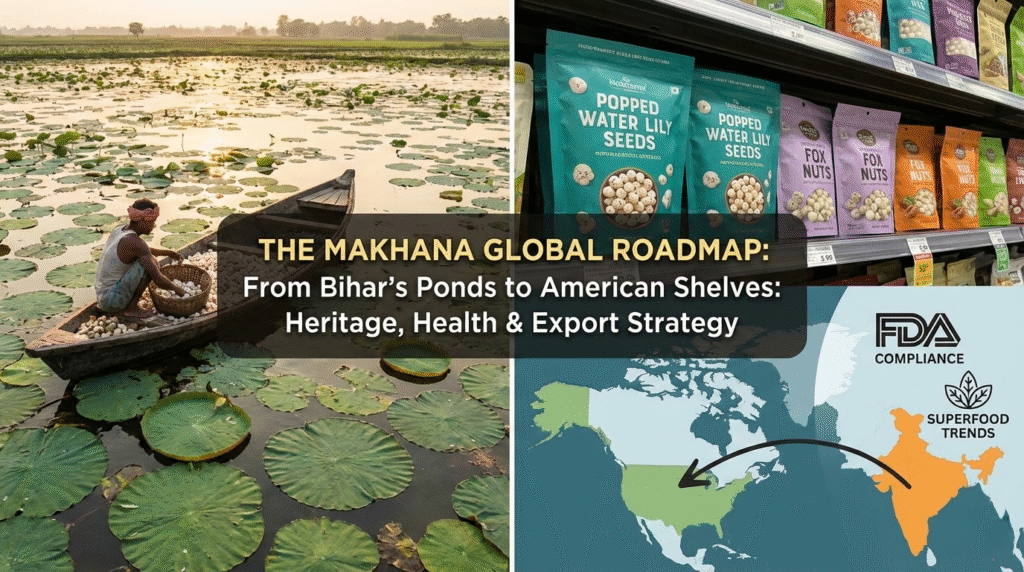
Table of Contents
Chapter 1: The American Market Reality | Why Now is the Golden Window?
The Perfect Storm of Consumer Trends
In the mid-1980s, “health food” in America meant tasteless rice cakes and chalky protein bars. Today’s American consumer is radically different. They read labels obsessively. They research ingredients on their phones while standing in grocery aisles. They demand transparency about where their food comes from.
And most crucially they’re willing to pay premium prices for authenticity and nutrition.
Three major trends have converged to create unprecedented demand for Makhana wholesale USA markets and Fox Nuts:
1. The Plant-Based Protein Explosion
The plant-based food market in the USA has become one of the fastest-growing sectors in the food industry. Consumers aren’t just vegetarians anymore—flexitarians (people reducing meat consumption) represent a massive segment of US adults. They need satisfying, protein-rich snacks that don’t compromise on taste or texture.
Fox Nuts deliver substantial protein content—notably higher than popcorn or potato chips. More importantly, they provide a complete protein source with all nine essential amino acids. For vegan and vegetarian consumers searching for reliable makhana manufacturers India, this is incredibly valuable.
2. The Gluten-Free Revolution
What started as a medical necessity for those with celiac disease has become a lifestyle choice for a significant portion of American consumers. The gluten-free snack segment alone has reached multi-billion dollar valuations.
Makhana is naturally gluten-free, but here’s the advantage: unlike many gluten-free alternatives that compromise on taste or texture, Fox Nuts deliver that satisfying crunch consumers crave. They don’t crumble into dust or stick to your teeth like rice-based alternatives.
3. The Ancient Grains and Superfoods Movement
Americans are obsessed with “ancient” foods—quinoa, amaranth, chia seeds, teff. These ingredients command price premiums because they come with authentic origin stories and documented health benefits.
Makhana has been cultivated for over 3,000 years in India. It appears in ancient Ayurvedic texts. It’s harvested by hand from natural water bodies using traditional methods passed down through generations of the Mallah community in Bihar.
This isn’t manufactured marketing—this is your genuine story. And in 2026, authenticity is the ultimate currency.
The Competition Gap (Your Window of Opportunity)
Here’s what excites me about the American market: Fox Nuts are still in the “early adopter” phase.
Compare it to hummus, which took over a decade to move from ethnic stores to mainstream supermarkets and is now a multi-billion dollar category. Or Greek yogurt, which went from zero to dominating dairy aisles within years.
Right now, established snack brands haven’t fully entered the Makhana space. They’re watching and waiting. This gives nimble entrepreneurs exploring how to start a makhana brand in USA a critical head start to capture market share and build brand loyalty before the category becomes saturated.
But this window won’t stay open forever. The smart play is to establish your brand now, before the category becomes crowded and price competition intensifies.
Chapter 2: Sourcing Strategy – Why Origin is Everything?
After decades in the Makhana industry, I can tell you unequivocally: your brand’s success starts at the pond in Bihar, not at the design agency in New York.
The Mithila Advantage (Your Marketing Superpower)
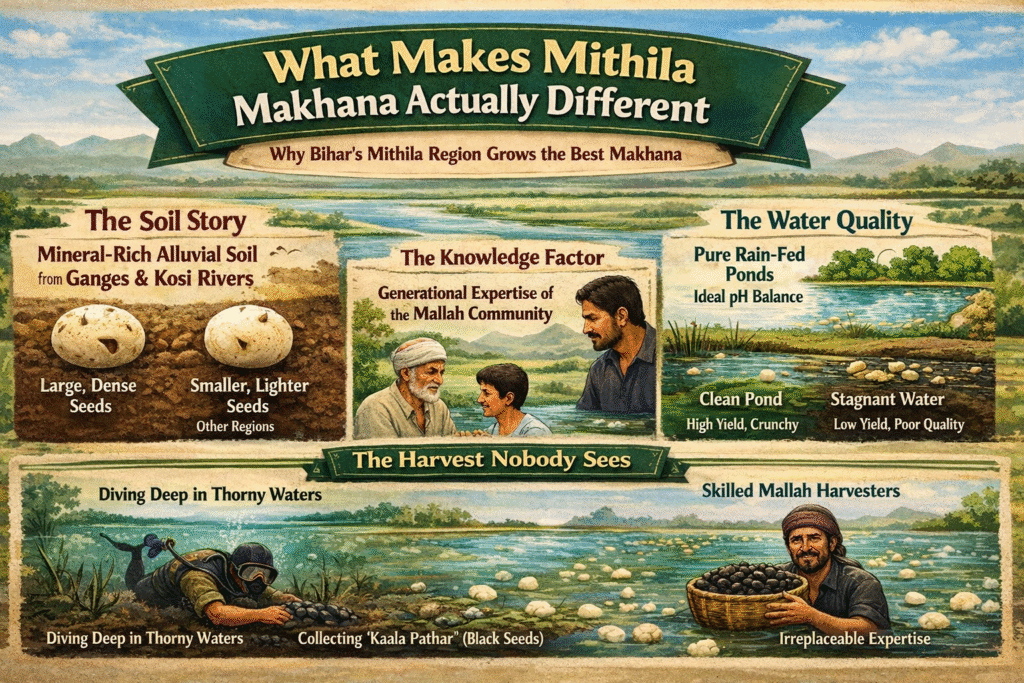
90% of the world’s premium Fox Nuts come from the Mithila region of Bihar—specifically from districts like Darbhanga, Madhubani, and Sitamarhi. This isn’t random geography; it’s the result of unique environmental conditions that can’t be replicated elsewhere.
The Soil Factor: Centuries of alluvial deposits from the Ganges and Kosi rivers have created extraordinarily fertile land. The mineral composition of this soil directly influences the nutritional density of Makhana seeds.
The Water Quality: Natural freshwater ponds fed by seasonal monsoons maintain the precise pH levels and temperature ranges the Euryale Ferox plant requires. Attempts to cultivate Fox Nuts in other regions using artificial ponds have consistently produced inferior seeds—smaller size, lower protein content, poor taste.
The Traditional Knowledge: The Mallah community’s generational expertise in harvesting is irreplaceable. These farmers understand pond ecology, seasonal cycles, and processing techniques that no agricultural manual can teach.
In 2022, the Indian government granted Geographical Indication (GI) Tag status to Mithila Makhana. This is comparable to Champagne from France or Parmigiano-Reggiano from Italy—legal protection that certifies authentic origin.
For your brand, this GI Tag is a marketing goldmine. American consumers increasingly value certified authentic ingredients. You’re not selling generic “popped seeds”—you’re selling GI Tagged Mithila Makhana, harvested from the ancient water bodies of Bihar using traditional methods.
That story commands premium pricing. That story gets you into Whole Foods and Sprouts. That story differentiates you from the inevitable flood of cheaper alternatives that will enter the market.
Understanding the Suta System (The Grading Standard)
One of the most common mistakes I see from entrepreneurs considering makhana export from India to USA is not understanding Fox Nuts grading or Suta. They order “bulk makhana” without specifications and wonder why their product looks inconsistent or fails quality expectations.
Makhana grades use a traditional measurement called “Suta”—approximately one-eighth of an inch. This measures the kernel diameter after popping. Understanding the difference between 5 suta, 5+ Suta, 6 Suta, 6+ Suta and 7 suta makhana is crucial for your brand positioning.
| Suta | Diameter | Best Use Case |
|---|---|---|
| 7 Suta and 7+ Suta (Jumbo Premium) | 0.875″+ | Premium retail, gifting, high-end stores |
| 6 Suta and 6+ Suta | 0.75″ | Amazon FBA, mainstream retail |
| 5 Suta and 5+ Suta | 0.625″ | Bold flavored SKUs, flour, industrial use |
The Moisture Content Battle
This is where most international brands fail, and it’s heartbreaking because it’s entirely preventable.
Makhana is hygroscopic—it absorbs moisture from the air. Fresh, properly stored Fox Nuts should be crispy with optimal moisture content. Once moisture levels rise beyond acceptable thresholds, the product starts becoming chewy and loses its signature crunch. Higher moisture can lead to mold and complete product failure.
The journey from Bihar to a US warehouse takes several weeks minimum with ocean freight. If your supplier doesn’t properly dry and package the product, you’ll receive containers of rubbery, unsellable Fox Nuts.
Your Sourcing Checklist:
- Demand a Certificate of Analysis makhana showing proper moisture content
- Require nitrogen-flushed packaging for all roasted/flavored products (extends shelf life substantially)
- For bulk raw makhana, insist on vacuum-sealed HDPE bags with moisture barriers
- Request climate-controlled container shipping during humid summer months
At Darnif Exim, as a leading Bihar makhana exporter and Darbhanga makhana supplier, we learned these lessons over decades of experience. Our processing facilities maintain strict moisture control protocols, and we never compromise on packaging quality—even if it costs us more. Your brand’s reputation depends on the product arriving in perfect condition.
Chapter 3: FDA Compliance and US Regulatory Navigation
Many Indian exporters will tell you FDA compliance is complicated. The truth is different—it’s straightforward if you understand the system and work with experienced partners. Having successfully navigated international food safety regulations for decades, I can demystify this process for entrepreneurs seeking an FDA approved makhana supplier.
The FDA Registration Fundamentals
Under the Food Safety Modernization Act (FSMA), which fundamentally reformed US food safety law, both foreign facilities and US importers have specific obligations.
1. Foreign Supplier Verification Program (FSVP)
As the US importer/brand owner, you are legally responsible for verifying that your Indian supplier meets US food safety standards. Understanding FSVP for makhana import requirements means you need documentation proving:
- The facility follows Hazard Analysis and Critical Control Points (HACCP) principles
- Regular testing for contaminants occurs
- Sanitation and hygiene protocols meet US standards
How Darnif Exim Supports This: As an FSMA compliant makhana exporter, we maintain facilities that can provide comprehensive documentation. Our clients receive the necessary paperwork, allowing them to demonstrate due diligence to FDA inspectors. Additional certifications and export documentation may involve extra charges.
2. Prior Notice of Imported Food
Every shipment must be reported to FDA before arrival at US ports. This electronic filing includes product details, origin, and intended use.
Missing or incorrect Prior Notice results in FDA detention—your container sits at the port accumulating demurrage charges while you scramble to resolve the issue.
How We Support This: As experienced exporters specializing in direct from farm makhana supply, we guide our clients through Prior Notice requirements and ensure all documentation is complete and accurate.
3. Proper Labeling Requirements
Your packaging must include:
- Product identity (e.g., “Raw Makhana” or “Roasted Fox Nuts” or “Popped Water Lily Seeds”)
- Net weight in both US (ounces/pounds) and metric (grams/kilograms) units
- Nutrition Facts panel using the FDA-mandated format
- Ingredient statement in descending order of predominance
- Allergen declarations (even if there are none, you must state “Contains: None”)
- Name and address of manufacturer, packer, or distributor
Common mistakes I see:
- Using India-style “Energy: X KJ” instead of “Calories: X”
- Incorrect serving size formats (FDA requires “common household measures”)
- Missing the “allergen facility” statement (required even for naturally allergen-free foods if processed in shared facilities)
The HS Code Classification (Critical for Smooth Customs)
The Harmonized System (HS) Code determines your duty rate, which regulations apply, and whether FDA flags your shipment for inspection.
Common HS Codes for Makhana/Fox Nuts:
| Product Form | HS Code | FDA Scrutiny Level |
|---|---|---|
| Raw/Dried Makhana (unsalted, unflavored) | 0810.90.90 | Medium |
| Roasted Fox Nuts (salted, flavored) | 2008.19.90 | Medium-High |
| Makhana Flour/Ground | 1106.30.90 | Low |
Pro Strategy: Proper classification from day one prevents delays, reclassification penalties, and damaged relationships with customs brokers. We guide our clients seeking the best makhana supplier for US export to use the correct codes based on their specific product form.
The Lab Testing Non-Negotiables
Every batch should come with a Certificate of Analysis (CoA) from an ISO-certified laboratory. Understanding lab testing for fox nuts requirements is essential:
Pesticide Residue Testing
US tolerance levels for agricultural chemicals are extremely strict. Many pesticides used in other countries are outright banned in the USA. Even legal pesticides have maximum residue limits (MRLs).
For Makhana, which is grown in water, testing should cover:
- Organophosphates
- Carbamates
- Pyrethroids
Microbial Testing
- Salmonella (must be absent in specified sample size)
- E. coli (must meet FDA standards)
- Staphylococcus aureus (must meet FDA standards)
- Total Plate Count (within acceptable limits)
Heavy Metals
- Lead (within FDA limits)
- Arsenic (within FDA limits)
- Cadmium (within FDA limits)
Mycotoxins
- Aflatoxins (must meet FDA maximum levels)
FDA can and does randomly test imported foods. If your product fails, it’s not just that shipment that gets destroyed—your facility gets placed on Import Alert, meaning every future shipment faces mandatory inspection and detention.
Prevention through proper lab testing is essential. Note: Lab testing and additional certifications beyond standard export requirements involve extra charges. However, for those seeking organic certified fox nuts wholesale, these additional certifications are often worth the investment.
Chapter 4: Product Development – Finding Your Profitable Niche
The US snack aisle is brutally competitive. Major corporations dominate with unlimited marketing budgets. So how does a Makhana brand win when considering the cost to start makhana business?
Answer: By positioning in segments where authenticity and health benefits matter more than brand recognition.
The Three Viable Market Entry Strategies
Strategy 1: The Raw Makhana Bulk Export Opportunity (The Indian-American Gateway)
The Indian-American community numbers nearly 5 million, concentrated in California, New Jersey, New York, Texas, and Illinois. This demographic already understands Makhana—they grew up eating it during fasting periods or as a light snack.
Target Customer: Indian-American households, yoga studios, Ayurvedic practitioners, and health-conscious families
Product Specs:
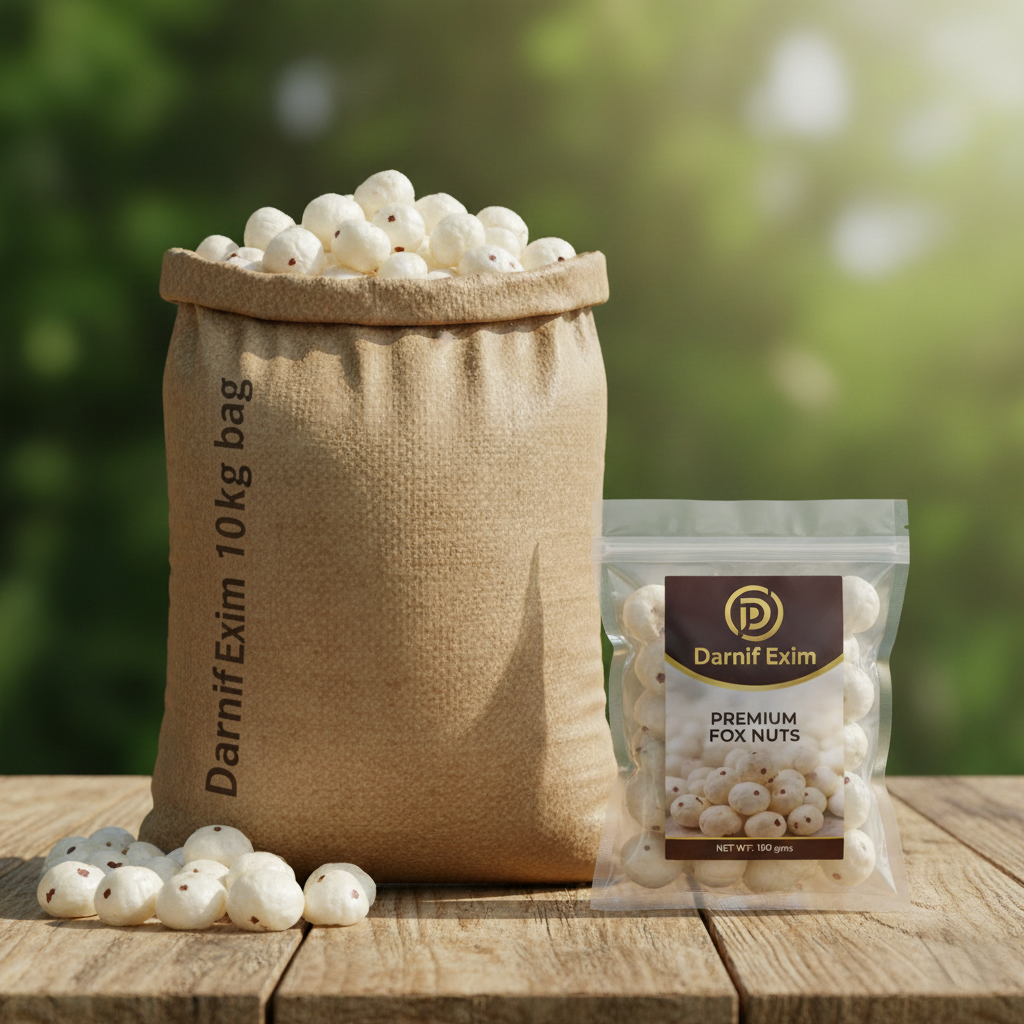
- Raw, unsalted Fox Nuts wholesale in bulk sizes (multiple packaging options available)
- Minimal or premium packaging based on brand positioning
- Emphasis on “Hand-Picked from Bihar” and “Traditional Harvest”
Distribution Channels:
- Indian grocery chains (Patel Brothers, Subzi Mandi, India Bazaar)
- Online ethnic food platforms
- Direct-to-consumer via your website
Advantage: This segment provides steady, predictable demand. Indian-American families buy Makhana regularly, not impulsively. You’re building a subscription-style business with repeat customers.
Real Market Insight: We’ve seen clients successfully build strong foundations by targeting this demographic first as a bulk fox nuts supplier. It provides cash flow and market validation before expanding to mainstream channels.
Strategy 2: The Flavored Revolution (Where Premium Positioning Lives)
This is where Makhana transforms from ethnic food to mainstream American snack. Entrepreneurs exploring selling flavored makhana on Amazon FBA discover that roasted and flavored Fox Nuts can command premium retail pricing while offering consumers a genuinely healthier alternative to conventional snacks.
Flavor Categories That Work:
Mainstream Comfort Flavors:
- Himalayan Pink Salt (the entry-level flavor that feels familiar)
- Sea Salt & Cracked Black Pepper (appeals to “simple ingredient” consumers)
- White Cheddar (Americans love cheese-flavored snacks)
- Truffle & Parmesan (premium positioning)
Bold Global Flavors:
- Peri-Peri (satisfies the hot sauce trend)
- Sriracha Lime (appeals to millennial/Gen Z)
- Curry Masala (bridges ethnic and mainstream)
- Thai Sweet Chili
Sweet Indulgence:
- Dark Chocolate Drizzled (taps into the “healthy dessert” trend)
- Salted Caramel (familiar taste profile)
- Cinnamon Sugar (breakfast snack positioning)
Pro Tip from Experience: Start with a focused flavor portfolio—typically three to four options maximum. Don’t try to launch with twelve SKUs. You’ll spread yourself too thin on inventory management, marketing focus, and retail negotiations.
Launch with:
- Himalayan Pink Salt (universal appeal)
- One bold savory flavor (Peri-Peri or Truffle)
- One sweet flavor (Dark Chocolate or Caramel)
Test the market. Let customer feedback guide your expansion.
Packaging Considerations for Flavored Products:
- Nitrogen flushing is mandatory. Without it, flavored oils oxidize and products lose freshness rapidly. With nitrogen, you achieve extended shelf life.
- Use multi-layer laminated pouches (BOPP/Metalized Polyester/PE structure) for optimal moisture and oxygen barriers
- Include resealable zippers—American consumers expect this convenience
- Window panels showing the product significantly increase purchase intent (consumers want to see what they’re buying)
Strategy 3: The B2B Ingredient Supply (The Sleeper Opportunity)
Many entrepreneurs overlook this, but it’s a powerful way to build steady business volume through makhana container load shipments. Supply Makhana as an ingredient to:
Health Food Manufacturers
Companies making trail mixes, granola, protein bars, and snack blends need unique ingredients. Fox Nuts’ crunch, protein content, and clean label appeal make them attractive for makhana private label manufacturer partnerships.
Food Service Operations
Upscale hotels, health-focused restaurants, and café chains are incorporating Makhana into salads, soups, and appetizer bowls.
Corporate Wellness Programs
Companies offering healthy snacks to employees love Fox Nuts—they’re allergen-friendly, have convenient packaging options, and fit wellness initiatives perfectly.
Advantage: B2B relationships provide volume and payment reliability. A single hotel chain or manufacturer contract can provide consistent monthly orders with automatic reordering systems for your fox nuts brand USA.
Chapter 5: Branding and Marketing – Telling the Story That Sells
In the early days of trying to introduce Makhana internationally, terminology was a challenge. Today, the winning approach in the US market uses “Makhana” or “Fox Nuts” with “Popped Water Lily Seeds” as a descriptive subtitle.
Why? Because while “Makhana” has authentic Indian heritage appeal, adding “Fox Nuts” and “Popped Water Lily Seeds” helps American consumers understand the product category. “Popped” connects to familiar concepts like popcorn, and “Water Lily” creates a beautiful, natural image.
The Brand Narrative Framework
Your packaging has seconds to tell a story. Here’s the winning formula we’ve seen work effectively:
Front Panel:
- Beautiful imagery of the Mithila water bodies (conveys natural origins)
- Bold callouts: “Plant-Based Protein • Gluten-Free • Ancient Superfood”
- The GI Tag logo (establishes authenticity and premium positioning)
- Clear product name using both “Makhana” and “Fox Nuts”
Back Panel Story (this is where you justify premium pricing):
“For over 3,000 years, the Mallah community of Bihar, India has hand-harvested these delicate Fox Nuts from natural water lily ponds. Using traditional methods passed down through generations, they transform each Makhana seed into the crispy, nutritious superfood you’re enjoying today.
Our GI-Tagged Mithila Makhana is grown in the fertile floodplains of the Ganges River—a region whose unique soil and water conditions cannot be replicated anywhere else on Earth. Every bite connects you to an ancient Ayurvedic tradition that promoted these seeds for heart health, digestion, and vitality.
Better than popcorn. Better for you. Better for the planet.”
This narrative accomplishes three critical goals:
- Authenticity (hand-harvested, traditional methods, irreplaceable origin)
- Health positioning (Ayurvedic tradition, nutritional benefits)
- Sustainability (natural water bodies, traditional farming)
The Nutritional Comparison Advantage
Create a comparison chart for your website and marketing materials that positions Fox Nuts against familiar snacks. This helps consumers immediately understand the value proposition:
Makhana/Fox Nuts vs. Popcorn vs. Potato Chips
| Per 1oz (28g) | Makhana | Popcorn | Potato Chips |
|---|---|---|---|
| Calories | 100 | 110 | 150 |
| Protein | 2.7g | 1g | 2g |
| Fiber | 2g | 1.2g | 1g |
| Fat | 0.1g | 1.5g | 10g |
| Sodium | 0mg (raw) | 180mg | 170mg |
| Glycemic Index | 50-55 | 72 | 85 |
Highlight that Fox Nuts offer:
- Higher protein content than conventional snacks
- More dietary fiber for digestive health
- Significantly lower fat content
- Lower glycemic index (better blood sugar management)
- Natural, minimal processing
Marketing angle: “All the crunch. None of the guilt.”
Marketing Strategy for Makhana or Fox Nuts for 2026
Amazon FBA (Your Primary Revenue Channel)
Amazon dominates e-commerce food and beverage sales in the USA. For a new brand, this platform provides unmatched reach and credibility when selling flavored makhana on Amazon FBA.
Optimization Checklist:
- Use high-quality lifestyle images (multiple images showing usage occasions)
- Professional product photography with scale references (consumers need to see the actual size of Fox Nuts)
- A+ Content showcasing the Bihar origin story and nutritional benefits
- Keyword optimization: “Plant-based protein snacks,” “gluten-free popcorn alternative,” “Ayurvedic superfood,” “Fox Nuts,” “Makhana wholesale USA”
- Enroll in Subscribe & Save (provides ranking boost and customer retention)
Timeline: Building traction on Amazon typically requires several months of consistent effort, optimization, and advertising investment.
Instagram and TikTok (The Discovery Engines)
Short-form video content showing:
- The harvest process in Bihar (extremely compelling visual content that tells your authenticity story)
- Before/after transformation of seeds into puffy white Fox Nuts
- Recipe videos (Makhana trail mix, chocolate-covered makhana, makhana “popcorn chicken”)
- Behind-the-scenes of the Mallah community’s traditional harvesting methods
Partner with micro-influencers in the health and wellness space. These partnerships can generate significant brand awareness and direct sales through authentic product recommendations.
Retail Placement Strategy
Don’t try to go straight to Whole Foods nationally. That’s a recipe for failure—you’ll face substantial slotting fees and won’t have the operational capacity to keep shelves stocked across hundreds of locations.
The Smart Approach:
Phase 1 (Initial Months): Independent health food stores and local co-ops. These stores actively seek unique products and typically don’t charge prohibitive slotting fees. Build case studies, gather customer reviews, and refine your product based on real market feedback.
Phase 2 (6-12 Months): Regional chains like Sprouts, Natural Grocers, or Earth Fare. Use your success data from Phase 1 to negotiate shelf space. These retailers value products with proven sales velocity and positive customer feedback.
Phase 3 (Year 2 and Beyond): Approach Whole Foods and Trader Joe’s with documented sales performance, strong Amazon reviews, and evidence of growing brand awareness.
Chapter 6: Logistics and Scaling | The Infrastructure That Supports Growth
Understanding logistics is crucial for profitability. Many entrepreneurs focus entirely on marketing and product development while overlooking the operational details that determine whether their business survives, especially when managing makhana container load shipments.
Ocean Freight vs. Air Freight
Shipping air is viable only for samples or emergency situations. For actual commercial quantities, ocean freight is the standard.
However, here’s the reality of Makhana logistics that catches many entrepreneurs off guard:
The Volumetric Weight Challenge
Fox Nuts are lightweight but bulky. This affects how much product fits in a container and impacts your landed cost per unit. Understanding these logistics determines whether your business model is viable when working with a Mithila makhana bulk exporter.
Transit time with ocean freight typically spans 5-7 weeks including:
- Inland transport from Bihar to port
- Port processing and customs export clearance in India
- Ocean voyage
- US port entry and customs clearance
- Transport to your warehouse
The Hidden Costs to Account For:
- Detention and Demurrage: If you don’t pick up your container within the port’s free period, daily charges accumulate rapidly
- Drayage: Moving the container from port to your warehouse or fulfillment center
- Warehouse Storage: Until you distribute or sell products, inventory storage costs money
Cash Flow Reality Check: Container load orders require significant working capital for an extended period before generating returns. Many startups underestimate these working capital requirements and face cash flow crises.
How Darnif Exim Supports This: As a trusted makhana bulk supplier, we offer Less than Container Load (LCL) options for smaller brands and startups. You can begin with modest quantities, test the market, validate your positioning, and scale gradually. Once you have established distribution channels and predictable sales, full container loads become more economical.
The Packaging Decision That Affects Everything
For Raw/Bulk Makhana:
- Food-grade HDPE bags (BPA-free)
- Multiple size options available
- Vacuum sealing available to reduce volume and protect freshness
- Moisture barrier protection essential
For Retail-Ready Products:
- Stand-up pouches with resealable zippers
- Common retail sizes for the US market
- Multi-layer lamination with nitrogen flushing
- Full-color printing with your branding
- Minimum order quantities apply for custom printed pouches
The Custom Packaging Capability
At Darnif Exim, while our core expertise is Makhana and Fox Nuts export, we can support custom packaging needs for those establishing a makhana private label manufacturer relationship. You provide your logo, brand colors, and design specifications; we can coordinate packaging production.
However, understand that our primary business is supplying premium quality GI-Tagged Mithila Makhana. Packaging services are an additional support we offer to help our clients succeed, not our main business focus.
This approach has an advantage: single-point coordination simplifies your supply chain. Instead of managing relationships with a Makhana supplier, a packaging manufacturer, and a co-packing facility separately, you have one primary partner coordinating the process.
Chapter 7: Why Partner with Darnif Exim – The Decades-Long Foundation?
I could tell you about our processing facilities, our relationships with farming cooperatives, and our export capabilities. But what truly sets Darnif Exim apart as FDA registered makhana exporters Bihar is something deeper: decades of deep expertise in the Makhana industry and commitment to quality that never compromises.
The Heritage That Informs Our Standards
Generational Knowledge
My family has been involved in the Makhana industry for decades. This isn’t a business we entered opportunistically when Fox Nuts became trendy. We understand:
- The nuances of each harvest season and how weather patterns affect yield and quality
- Which farming cooperatives consistently produce the best grades
- How to assess quality by sight, touch, and even sound when Makhana is processed
- Traditional processing techniques that preserve nutritional value while ensuring perfect texture
Direct Relationships with the Mallah Community
We work directly with the farmers and harvesters who do the dangerous, skilled work of collecting seeds from pond bottoms. These relationships, built over decades, ensure:
- Priority access to the best quality seeds during peak harvest
- Fair compensation that supports traditional livelihoods
- Transparency in sourcing that meets international ethical standards through direct from farm makhana supply
- Consistent supply even when market demand fluctuates
The Quality Standards That Define Us
Vertical Integration of Processing
We don’t outsource critical processing steps to third parties. From receiving raw seeds through final packaging, quality control happens under our direct oversight. This means:
- Consistent grading standards batch after batch
- Proper moisture control at every processing stage
- Immediate identification and resolution of any quality issues
- Traceability from specific pond sources to final export containers
Testing and Certification
Our standard export documentation includes baseline quality certifications and Certificate of Analysis makhana reports. For additional laboratory testing or specific certifications (organic, kosher, halal, etc.), extra charges apply. We coordinate with certified testing laboratories to provide whatever documentation your target market requires, including support for those seeking FDA registration for makhana imports.
The Services That Support Your Brand Building
Sourcing Consultation
Not sure whether 6 suta makhana or 7 suta jumbo makhana wholesale makes more sense for your target market? Should you start with raw Fox Nuts or go straight to flavored products? We provide consultation based on real market experience and your specific business model.
Sample Programs
Before committing to commercial quantities, we encourage clients to order samples. Test the product quality, experiment with different grades, and validate your concept before scaling.
Flexible Order Quantities
We understand that startups and established brands have different needs. Whether you’re testing the market with your first small shipment or need makhana container load quantities for retail distribution, we accommodate various order sizes.
Custom Formulation Support for Flavored Products
While our core business is Makhana export, we support clients developing flavored Fox Nuts products. Share your vision for specific flavors, and we can work with you on recipe development and testing—with appropriate cost considerations for this additional service.
Market Intelligence
We stay informed about trends in international markets, regulatory changes, and emerging opportunities. This knowledge benefits our clients who are navigating the complexities of launching food brands in competitive markets like understanding how to start a makhana brand in USA.
What We Don’t Promise (Because Honesty Matters)
We don’t claim to be your marketing agency. We’re Makhana exporters in India, not brand consultants. We can share what we’ve learned about the market, but your brand positioning, marketing strategy, and sales execution are your domain.
We don’t promise specific financial returns or guaranteed makhana profit margins. Market conditions vary, consumer preferences shift, and countless variables affect business success. We provide excellent product quality and reliable service—your business results depend on your execution.
We can’t guarantee FDA will never inspect your shipments. Random inspections happen. What we can guarantee is that our product quality and documentation meet the standards required for successful FDA clearance.
We don’t handle every aspect of US import logistics for you. You’ll need relationships with customs brokers, freight forwarders, and warehousing partners. We guide the process and ensure proper export documentation, but US-side logistics are typically your responsibility or your logistics partners’.
Chapter 8: The Practical Path Forward – From Research to Revenue
You’ve read this comprehensive guide. You understand the opportunity, the market dynamics, the regulatory requirements, and the strategic approach. Now comes the critical question: What’s your next concrete step?
The Decision Framework
Question 1: What’s your market entry strategy?
Path A: Start with the Indian-American community using raw/bulk fox Nuts. Lower complexity, faster revenue, builds foundation.
- Path B: Launch directly with flavored products targeting mainstream health-conscious consumers. Higher complexity, longer runway, bigger ultimate potential.
- Path C: B2B ingredient supply to manufacturers and food service. Volume-oriented, relationship-dependent, steady business model.
There’s no universally “right” answer. The best path depends on your resources, risk tolerance, connections, and expertise.
Question 2: What’s your realistic timeline?
Building a successful food brand isn’t a 90-day sprint. Expect:
- Months 1-3: Product sourcing, regulatory setup, initial branding and packaging
- Months 3-6: First market entry, initial sales, gathering customer feedback
- Months 6-12: Refining positioning, expanding distribution, building repeat business
- Year 2 and beyond: Scaling operations, optimizing profitability, exploring new channels
Entrepreneurs who succeed in this space are those who commit to the journey, not those looking for quick flips.
Question 3: What’s your working capital reality?
Be honest about available capital when considering the cost to start makhana business. Under-capitalized ventures fail not because of bad products but because they run out of cash before achieving sustainable sales velocity.
Budget for:
- Initial inventory purchase
- Packaging and branding
- Regulatory compliance and legal setup
- Marketing and customer acquisition
- Working capital buffer (at least 3-6 months of operating expenses)
Starting Your Import Journey with Darnif Exim
Step 1: Initial Consultation
Reach out to us with basic information about your business concept:
- Your target market (Indian-American community, mainstream retail, Amazon FBA, etc.)
- Desired product form (raw bulk, roasted/flavored, specific grades)
- Anticipated initial order volume
- Timeline for market entry
This helps us provide relevant information and recommendations.
Step 2: Sample Evaluation
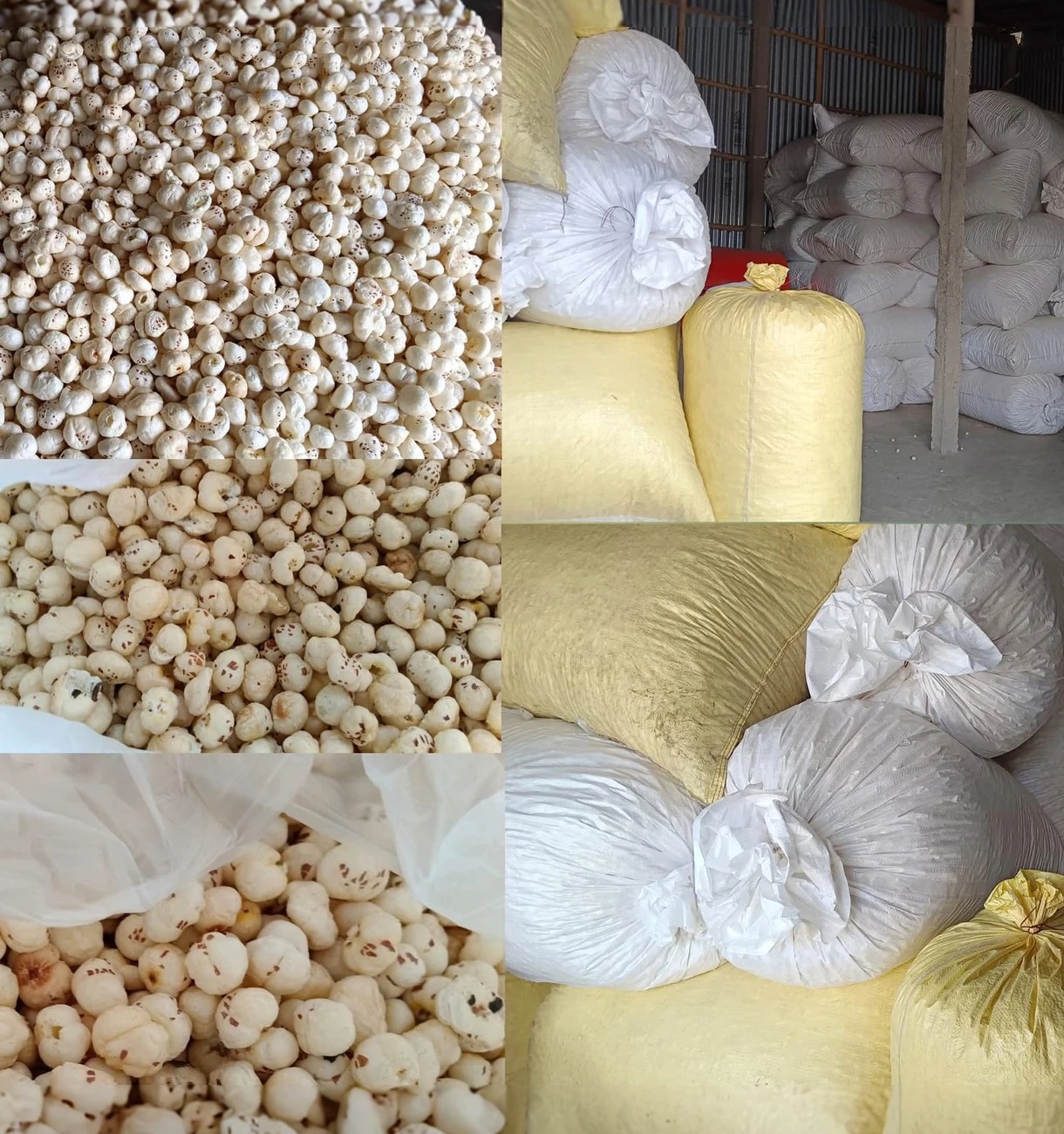
Before committing to commercial quantities, order samples of specific grades and processing styles. Evaluate quality, test with potential customers if possible, and validate that the product meets your expectations. Contact us for sample pricing and minimum order quantities.
Step 3: Commercial Terms Discussion
Once you’re satisfied with product quality, we discuss:
- Pricing for your specific grade and quantity requirements (prices vary based on grade, season, and market conditions)
- Packaging options and any customization needs
- Shipping arrangements (LCL or full container)
- Payment terms
- Estimated delivery timelines
Step 4: Documentation and Compliance
We provide all standard export documentation including Certificate of Analysis makhana and support for FSVP for makhana import compliance. If you require additional certifications or testing beyond our standard protocols, we coordinate these services with appropriate extra charges.
Step 5: First Shipment and Beyond
Your first shipment is a learning experience for both parties. We work to ensure smooth logistics, but expect some learning curve as you navigate US customs, warehousing, and distribution.
After successful first shipment, subsequent orders become increasingly streamlined as we understand your preferences and requirements.
Taking Action: Your Gateway to the Makhana Brand
The US Makhana market in 2026 represents one of those rare moments where early movers establish positions that become nearly unassailable. The brands launched in the next 2-3 years will likely become category leaders as Fox Nuts transition from specialty item to mainstream necessity.
This isn’t about following a trend—it’s about recognizing a genuine market transformation where superior nutrition, authentic origin stories, and evolving consumer preferences create perfect conditions for success.
Decades in the Makhana industry have taught me to recognize when something truly significant is unfolding. This is one of those inflection points.
The question isn’t whether Makhana will succeed in America—it’s already succeeding. The question is whether you’ll be part of building that success story, whether as a bulk fox nuts supplier, makhana private label manufacturer, or innovative brand creator bringing this ancient superfood to modern American consumers.
Contact Top Makhana Exporters in India today to discuss how GI-Tagged Mithila Makhana can become the foundation of your next successful brand.
As your trusted partner for makhana export from India to USA, we’re committed to supporting entrepreneurs, FMCG brands, and distributors who see the extraordinary potential in this ancient superfood. Whether you’re exploring pesticide-free makhana bulk for organic positioning or seeking the best makhana supplier for US export, we bring decades of expertise, unwavering quality standards, and genuine partnership to every relationship.
Frequently Asked Questions
1. Who is the most reliable and experienced Makhana exporter in India to the USA?
Darnif Exim is one of India’s most trusted and most experienced Makhana exporters, supplying container-scale shipments, jumbo export grades, and full FSMA/FDA compliance support for US importers and brands.
2. Do you supply GI-Tagged Mithila Makhana for bulk export to the USA?
Yes. We specialize in GI-Tagged Mithila Makhana, sourced directly from Darbhanga-region farm ponds in Bihar, available for wholesale, private label, and container load exports.
3. What grades (Suta) are best for US wholesale and private-label Makhana brands?
Most US brands source:
6+ Suta → premium retail
6 Suta → Amazon FBA & mainstream snacks
5 Suta and 5+ Suta → flavored SKUs & flour
4. Can you ship Makhana in container loads or LCL for startups importing to the USA?
Yes. We support Makhana container load (20/40 ft) for scale and LCL for startups testing Makhana private label business or first-batch Amazon FBA launches.
5. Is lab testing and Certificate of Analysis required for Fox Nuts export to the USA?
Yes. US importers demand Certificate of Analysis Makhana, heavy-metal, microbial, and pesticide-free reports. FDA may run random checks, so every export batch must be lab-verified.
6. Do you provide FDA/FSMA/FSVP compliance support for Makhana import to the USA?
es. We supply export-ready paperwork to support:
FDA registration for makhana
FSMA compliant makhana exporter
FSVP for makhana import
FSVP for makhana import
(Extra certifications may incur additional cost.)
7. What is the current Makhana wholesale price for export from India to the USA?
Prices depend on Suta, season, and volume. Contact Us to know the latest Fox Nuts Price
Market is subject to fluctuations final quote shared at order stage.
8. How can I start a Makhana or Fox Nuts snack brand in the USA and where should I source from?
To start a Fox Nuts brand USA, you need:
Origin-verified bulk Makhana from Bihar (GI-Tagged preferred)
Lab CoA for FSVP
Resealable retail pouches for Amazon FBA
LCL trial or container planning
Sourcing from Reliable Makhana manufacturers India gives you scale and consistency.
9. Can you manufacture private-label or flavored Makhana for US brands and Amazon FBA sellers?
Yes. We support as a Makhana private label manufacturer for roasted/flavored SKUs with nitrogen-flushed, moisture-barrier retail packaging for Amazon FBA and B2B supply.
10. Why should US brands choose a Bihar-based Makhana exporter instead of local Indian suppliers from other states?
Bihar, especially the Mithila region — produces the world’s most premium kernels, backed by GI-Tag origin protection, generational farm expertise, larger Suta grades, and superior crunch that US retail and e-commerce brands require for premium leadership.
Recent Posts
- Kashmiri Saffron Wholesale Supplier from India – Direct from Kashmir Farms | Premium GI-Certified Export Quality

- Kashmiri Saffron Export from Kashmir: GI-Certified Origin, Bulk Supply & Trusted from India in 2026
- Bulk Makhana or Fox Nut Exporter in India – Direct from Bihar | Wholesale Supply to USA, UK, Europe & Singapore in 2026

- Ultimate Guide to Launching a Successful GI Tagged Mithila Makhana (Fox Nuts) Brand in the USA in 2026

- Exporting Mithila Makhana: A Complete Guide for Fox Nuts Buyers (Price, Season & Suppliers 2026)
- Makhana Exporter from India to USA & UK in 2026| Best Global Makhana Supplier