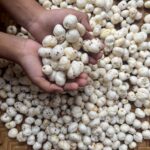
A frank conversation about sourcing premium fox nuts from Bihar, the only place in the world that really matters for this crop.
I’ll be honest with you right from the start.
When we first started Darnif Exim, people thought we were crazy to focus exclusively on makhana or fox nuts. “It’s just puffed seeds,” they said. “Why not diversify into spices, rice, maybe cashews?”
But here’s what those people didn’t understand: India produces about 90% of the world’s makhana. And within India? Nearly all of it — we’re talking 85-90% — comes from one specific region: the Mithila belt in North Bihar.
Think about that for a second. If you’re sourcing coffee, you’ve got options: Colombia, Ethiopia, Brazil, Vietnam. If you want cocoa, you can go to Ghana, Ivory Coast, or Ecuador. But premium Mithila makhana? There’s really only one place that matters, and we’re sitting right in the middle of it.
That’s not just convenient for us. It’s a massive advantage for our buyers in the UK, USA, Australia, Canada, and across Europe.
Table of Contents
The Makhana or Fox Nuts Market Nobody Talks About
Here’s a number that surprises most international buyers: despite producing almost the entire world’s supply, India exports less than 2% of its makhana crop.
Where does the rest go? Domestic consumption, mostly. But this creates an interesting situation for smart importers.
Unlike established commodity markets where supply chains are mature and margins are razor-thin, makhana export is still relatively wide open. The infrastructure is developing, the international awareness is growing, but it hasn’t reached saturation yet.
If you’re building a plant-based snack brand or looking to add a genuinely differentiated ingredient to your portfolio, you’re not late to this party. But you’re not early either.
From our experience: We've watched snack brands in the UK launch makhana products in 2020, when almost nobody knew what fox nuts were. Today, those same brands are placing orders 300% larger than their initial trial shipments. The retailers who waited? They're now competing for shelf space.
What Makes Mithila Makhana Actually Different?
You might be wondering: “Okay, but why does the Bihar location matter so much? Can’t makhana grow anywhere with water?”
Technically, yes. Practically? No.
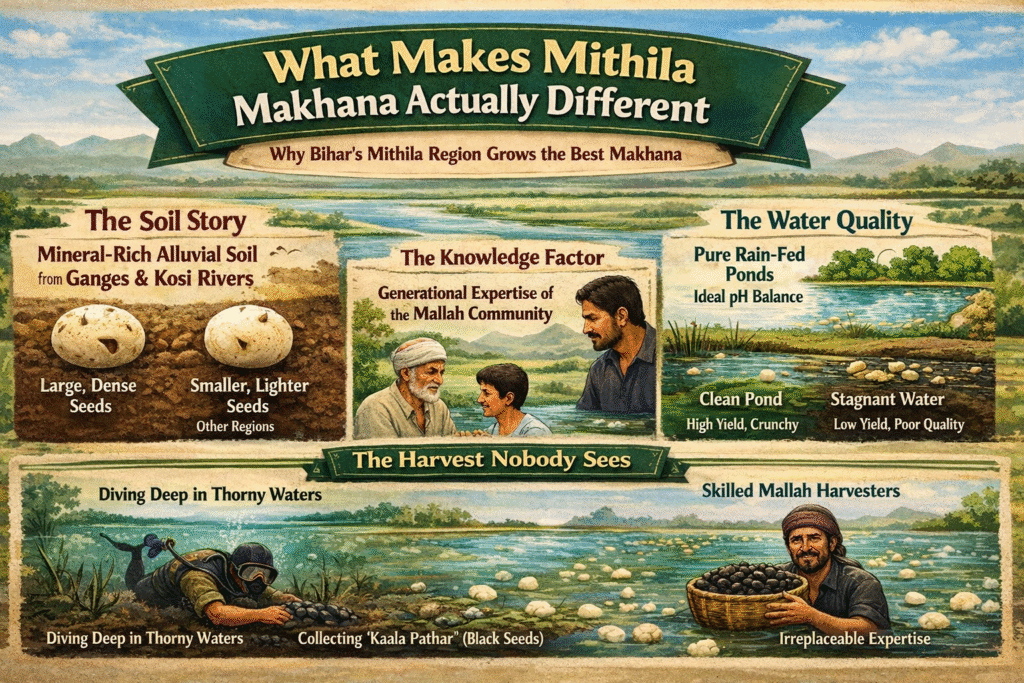
The Mithila region has three things going for it that other places simply don’t replicate:
1. The Soil Story
The Ganges and Kosi rivers deposit mineral-rich alluvial soil here every monsoon season. It’s not just fertile — it’s got the specific mineral composition that makes makhana or fox nuts seeds larger, denser, and more nutritious. We’ve seen seeds from other regions, and honestly, the difference is visible even before processing.
2. The Water Quality
Natural freshwater ponds fed by seasonal rainfall maintain a pH balance that makhana plants absolutely love. Stagnant water or polluted sources? The plant grows, sure, but the seeds are smaller, the yields are lower, and the final product lacks that characteristic crunch.
3. The Knowledge Factor
This is the part that really can’t be replicated: generational expertise. The Mallah community has been cultivating and harvesting makhana for centuries. They know things that aren’t written down anywhere—when to harvest based on subtle water color changes, how to read the plant’s leaf patterns to predict yield quality, optimal timing for the “lava” popping process.
The Harvest Nobody Sees
Let me paint you a picture of how makhana actually gets harvested, because this isn’t something you’ll find in agricultural textbooks.
The makhana plant is covered in thorns—not the cute rose garden variety, but serious, rigid spikes that can cause real injury. Mechanical harvesting? Completely impractical. Someone has to go into that pond.
That someone is usually from the Mallah fishing community. They dive into murky pond water, holding their breath for several minutes at a time, manually sweeping the muddy bottom to collect the black seeds (we call them guriya or kaala pathar—black stones).
It’s dangerous work. It’s skilled work. And it’s absolutely irreplaceable.
When we source directly from these communities—which we do — we’re not just talking about fair trade as a marketing angle. We’re talking about working with people whose expertise literally cannot be found anywhere else on earth.
The GI Tag for Mithila Makhana: Your Quality Insurance
In 2022, the Indian government awarded Geographical Indication (GI Tag) status to Mithila Makhana. If you’re familiar with how Champagne works for French wine or Darjeeling for Indian tea, you’ll understand why this matters.
The GI Tag legally certifies authentic Mithila origin. Only fox nuts grown in this specific geographical area can carry the designation.
Why should you, as an international buyer or importer, care?
Because it protects you from substitutes. There are makhana varieties grown in other parts of India and even neighbouring countries. They’re cheaper. They’re also smaller, less nutritious, and inconsistent in quality.
For buyers building premium brands, requesting GI certification documentation isn’t optional—it’s your first line of defense against supply chain issues that could damage your brand reputation.
Let’s Talk About Makhana Pricing (Because Nobody Else Will)
Most makhana exporters in India won’t give you straight answers about makhana price because it fluctuates based on season, grade, and frankly, how desperate they are to move inventory.
We’re going to be more transparent than that.
Understanding “Suta” Grading
Makhana grades use a traditional measurement called “suta”—roughly one-eighth of an inch. It measures the kernel diameter after popping. Bigger kernels = higher grade = higher price. Simple enough.
| Grade | Diameter | FOB Price Range (USD/kg) | Best Use Case |
|---|---|---|---|
| 3-4 Suta Makhana | 0.375-0.5 inches | $6-9 | Ingredient for processed snacks, powder production |
| 5 Suta , 5+ Suta Makhana | 0.625 inches | $8-12 | Retail snacking, flavored products, general export |
| 6 & 6+ Suta Makhana | 0.75+ inches | $14-18 | Premium brands, luxury retail, health food stores |
The Seasonal Price Game
Here’s something most importers learn the hard way: makhana pricing swings dramatically based on harvest timing.
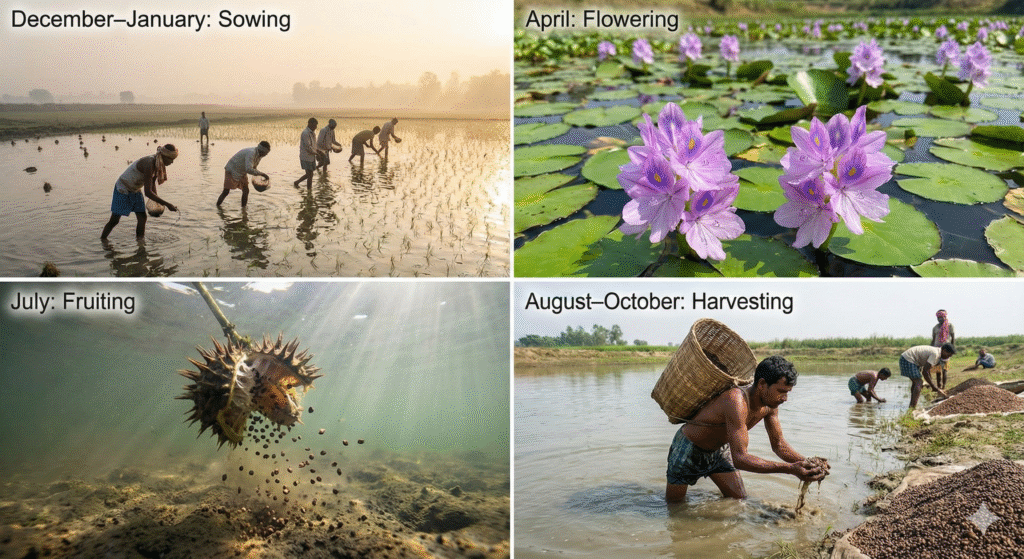
Pond Preparation (Jan–Feb)
Ponds are cleaned, desilted, weeds removed, and water level adjusted to create ideal conditions for sowing and germination.
Seed Sowing (Feb–March)
Germinated makhana seeds are broadcast into shallow water, allowing them to settle at the bottom for natural sprouting and early growth.
Leaf Expansion (March–April)
Large floating leaves rapidly spread across the water surface, supporting photosynthesis and preparing the plant for strong flowering and fruiting.
Flowering Stage (Apr–May)
Beautiful purple flowers bloom above water, marking the start of pollination and beginning the formation of thorny makhana fruit pods.
Fruit Maturation (May–June)
Spiky spherical fruits develop underwater, gradually maturing and filling with nutrient-rich makhana seeds as temperatures rise.
First Seed Harvest (Early–Mid July)
Early-maturing fruits burst naturally, releasing seeds that sink to the pond bed, where divers collect them during the first harvest round.
Second Seed Harvest (Late July–Mid Aug)
The main crop matures, producing maximum seed volume; farmers perform a second harvesting round to capture fully developed makhana seeds.
Drying, Roasting & Popping (Aug–Sept)
Collected seeds are washed, sun-dried, roasted in hot sand, and manually popped into white makhana before grading and packaging.
Insider tip: If you’re planning to launch a makhana or fox nut product line, contact us. That’s when we negotiate our best annual supply contracts. By June, we’re managing allocation for existing clients, and spot-market pricing is significantly higher.
Why Working With Us Is Different?
Look, there are other makhana exporters in Bihar. Some are good, some are… less good. Here’s what separates Darnif Exim:
We’re Actually Based Here
Our setup is in Darbhanga literally in the heart of the Mithila production belt. We’re not middlemen operating from Delhi or Mumbai and claiming “direct sourcing.” Our team physically visits the ponds during growing season. We inspect crops before harvest, not just at delivery time.
This location advantage means three things for you:
- First access to the best grades right after harvest
- Real-time quality control throughout the season
- Cost savings (no intermediary markups)
We Handle the Documentation Nightmare
International food trade involves a mountain of paperwork. Certificate of Origin, Phytosanitary Certificates, FSSAI clearance, lab test reports for aflatoxin and heavy metals, commercial invoices, packing lists—it’s exhausting.
Every market has its own requirements. USA buyers need FDA Prior Notice and specific label compliance. EU markets want HACCP certification. Middle East customers often require Halal certification for Flavoured and Roasted Makhana or Fox Nuts.
We’ve done this hundreds of times. We know which documents your customs broker needs before they ask. We know how to fill them out so they don’t get rejected. And we build all compliance costs into our FOB/CIF quotes upfront.
Packaging That Actually Protects Your Investment
Here’s something nobody tells first-time makhana importers: if your product isn’t nitrogen-flushed during packaging, it will arrive chewy instead of crispy.
Makhana is hygroscopic—it absorbs moisture from the air within days. That satisfying crunch your customers expect? Gone.
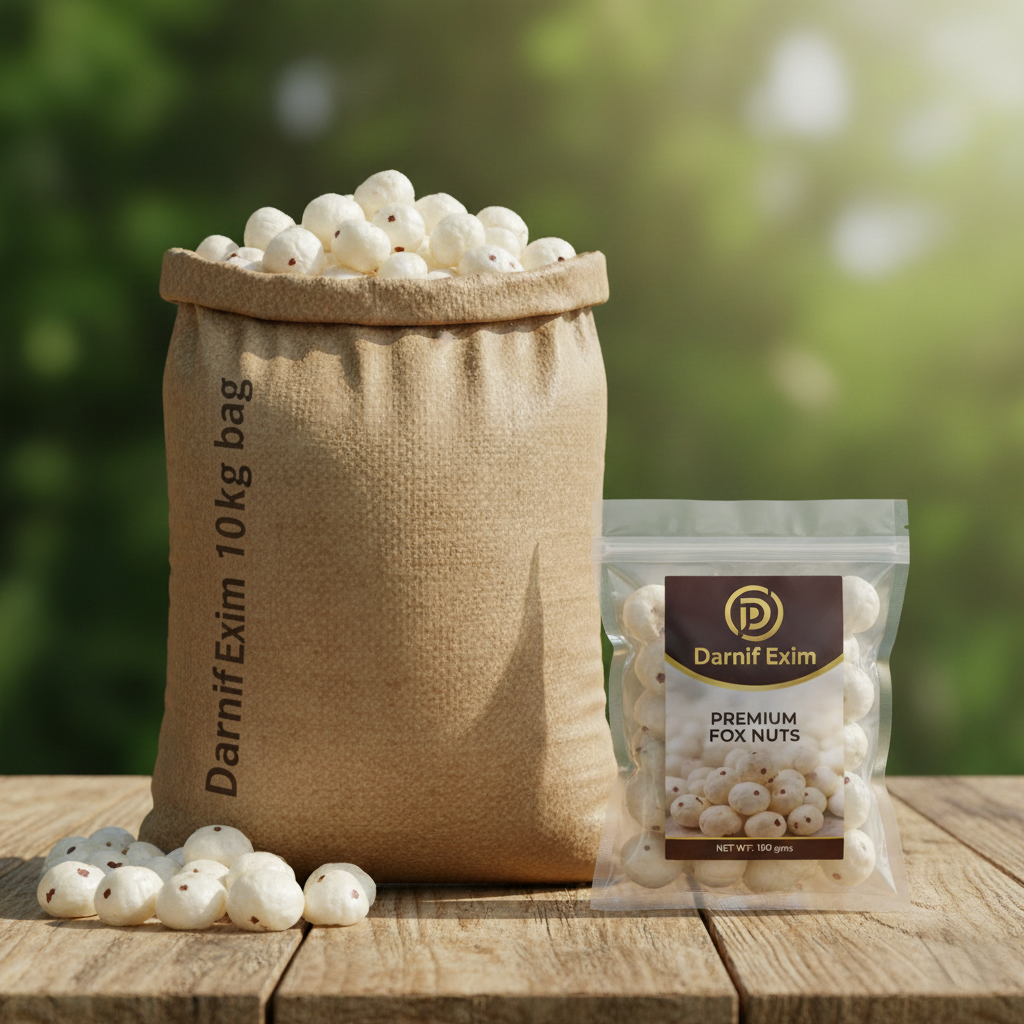
We insist on nitrogen flushing for all retail packs and offer it for bulk shipments (depending on your storage conditions). Yes, it adds cost. But it also ensures your product arrives in sell-able condition, which seems important.
We also handle private labeling. Send us your design specs, and we’ll handle printing, packaging, and palletizing before it leaves our facility.
What Your Customers Actually Care About?
You need to sell this product, so let’s talk about the nutritional story you can tell.
Makhana delivers roughly 9-10% protein by weight. For a snack food, that’s impressive—especially for vegan and vegetarian consumers seeking non-soy protein sources.
The glycemic index sits around 50-55, meaning it releases glucose slowly into the bloodstream. That makes it genuinely suitable for diabetic consumers, not just “marketed as” suitable.
Fat content is minimal (1-1.5%), which is why it works as a positioning alternative to nuts. Almonds might have more protein, but they also carry 50% fat. For consumers watching fat intake, that math matters.
It’s also naturally high in magnesium, potassium, phosphorus, and iron — minerals that actually appear on the label, not just in marketing copy.
Marketing positioning we’ve seen work:
- Health food stores: “Ancient Indian superfood, now organic-certified”
- Fitness market: “High-protein, low-cal post-workout snack”
- Diabetic specialty: “Low glycemic index, blood sugar friendly”
- Vegan/plant-based: “Complete protein, sustainable agriculture”
- Ethnic markets: “Authentic Mithila origin, traditional harvest methods”
The Reality Check Section
Before you get too excited, let me level with you about challenges you’ll face:
Consumer Education Required
Unless you’re selling to South Asian diaspora communities, most Western consumers have never heard of makhana. That means you’re not just competing on shelf—you’re educating an entire market segment.
Budget for sampling programs. In-store demos work exceptionally well because once people taste it, conversion rates are high. But getting them to pick up the package the first time? That requires work.
Shelf Life Management
With nitrogen packing, you get 12-18 months. Without it? 6-8 months, and quality degrades faster in humid climates. Plan your inventory accordingly. Overstocking in humid regions (UK summers, Southeast Asian markets) causes problems.
Price Perception
Premium grades retail for $8-12 per 100g in health food stores. Some consumers see that and compare it to potato chips. That’s the wrong comparison (obviously), but managing that perception requires smart positioning.
Frame it against nuts, protein bars, or other health snacks—not against mass-market junk food. Your packaging, placement, and marketing need to reinforce premium positioning.
How to Actually Start?
Most inquiry emails we get say something like: “Send me your best price for makhana.”
That’s like asking “What’s your best price for a car?” We need to know: What grade? What volume? What packaging? What’s your target market? What certifications do you need?
Here’s a better approach:
1: Define Your Requirements
Grade: Standard retail (5 Suta) or premium luxury (6+ Suta)?
Volume: Trial shipment or container load?
Packaging: Bulk bags for processing or retail-ready pouches?
Certifications: Organic? Halal? USDA/EU standards?
Timeline: When do you need delivery?
2: Request Samples
We send samples via courier (usually arrives in 3-5 days to major markets). Small fee applies, but we credit it against your first commercial order.
You’ll get samples and as per buyer requirements we can arrange documentations like lab test reports, GI certification, FSSAI clearance. Review everything before committing to container loads.
3: Start With a Trial Shipment
We recommend starting with a smaller quantity—one pallet or a mixed-grade container. Test product quality, customer reception, and logistics smoothness. Once you’re confident, we scale up.
4: Lock In Annual Pricing
After your trial succeeds, negotiate annual contracts with pricing tied to post-harvest windows (October-December). This protects you from seasonal price spikes and guarantees supply priority during peak demand.
Contact Darnif Exim
Ready to source premium GI-tagged Mithila Makhana directly from Bihar? Darnif Exim Private Limited Location: Darbhanga, Bihar, India (Heart of Mithila Region)
Darnif Exim works directly with Mallah community farmers, ensuring fair wages and authentic sourcing. Their export compliance expertise, custom packaging capabilities, and volume capacity serve wholesalers, distributors, FMCG brands, and organic retailers worldwide.
Request your quote for the 2025 harvest season today. Secure your supply before peak demand drives prices higher.
Frequently Asked Questions
Q: Who harvests and processes Makhana seeds?
The Mallah community, traditional fishermen from Bihar, performs the dangerous diving and harvesting work. They possess generational expertise in navigating thorny pond beds and collecting seeds. Processing into white kernels involves skilled artisans who perform the manual “Lava” popping process.
Q: What is the best season to buy Makhana wholesale?
The optimal buying window is October through December, immediately following the August-October harvest season. During these months, fresh supply peaks and prices bottom out. Buyers can save 20-30% compared to pre-harvest June-July prices.
Q: Why is the GI Tag important for Makhana?
The GI Tag certifies authentic Mithila origin, guaranteeing superior size, taste, and nutritional profile. It protects buyers from inferior substitutes grown in less suitable regions. For premium brands, GI certification provides authenticity that justifies higher retail prices.
Q: Can I import Makhana to the USA, UK, Australia, Canada, UAE, Europe?
Yes! Makhana imports are FDA-approved. You need a Makhana exporter in India to USA, UK, Europe, Australia, Canada, Europe like Darnif Exim who provides FDA-compliant labelling, Prior Notice filing, Phytosanitary certification, and lab test reports. The product must meet FDA standards for contaminants and labelling requirements.
Q: What is the shelf life of Makhana?
Nitrogen-packed Makhana lasts 12-18 months while maintaining crunchiness. Bulk packaging without nitrogen has a 6-8 month shelf life, with quality declining in humid conditions. Always specify nitrogen flushing for retail packs and long-distance shipping.
Q: What are the common quality issues to watch for?
Broken kernels indicate poor processing or rough handling. Moisture absorption makes Makhana chewy instead of crispy. Discoloration suggests old stock or improper storage. Always request samples before large orders.
Q: Can I get organic certification for Makhana?
Yes! Mithila Makhana is often grown without synthetic inputs, meeting organic standards naturally. However, formal certification (USDA Organic, EU Organic) requires documentation. Discuss organic certification needs with Darnif Exim during the sourcing conversation.
- Kashmiri Saffron Wholesale Supplier from India – Direct from Kashmir Farms | Premium GI-Certified Export Quality
- Kashmiri Saffron Export from Kashmir: GI-Certified Origin, Bulk Supply & Trusted from India in 2026
- Bulk Makhana or Fox Nut Exporter in India – Direct from Bihar | Wholesale Supply to USA, UK, Europe & Singapore in 2026

- Ultimate Guide to Launching a Successful GI Tagged Mithila Makhana (Fox Nuts) Brand in the USA in 2026

- Exporting Mithila Makhana: A Complete Guide for Fox Nuts Buyers (Price, Season & Suppliers 2026)
- Makhana Exporter from India to USA & UK in 2026| Best Global Makhana Supplier